Migration
 Chemical Reactor Design Toolbox Reference Manual
Chemical Reactor Design Toolbox Reference Manual ChemReactorDesign.Basic.Liquid.Transport.Migration
Description
The component generates the molar fluxes for both diffusion due to concentration gradients.

and migration due to potential gradients

The velocity of the solvent is chosen as reference frame

The solvent AN carries no charge

Then the molar flow rates become

The energy flow rate is determined as

with
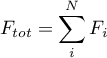
The positive direction for the fluxes is from port A to port B.
Assumptions and Limitations
Generally, the species AN is regarded as solvent.
Ports
Conserving
Liquid conserving port
Port_A = Liquid; %
Liquid conserving port
Port_B = Liquid; %
Input
Physical signal that controls the cross sectional area
Ain = {0,'m^2'};Dependencies: The port is only visible when the option
areaInputis set toOn.
Parameters
Options
Option to select area input
areaInput = OnOff.Off;
Off|On
Geometry
Cross sectional area
A0 = {1,'m^2'};Dependencies: The parameter is only visible when the option
areaInputis set toOff.Transport distance
delta = {1.0e-03,'m'};x
Mass Transport
Diffusion coefficients
D = {1.0e-06*[1,1],'m^2/s'};Note Initially only two species are considered, i.e.
 . As the number of species can be changed via the properties
dialogue, the size of the array must be adjusted accordingly.
. As the number of species can be changed via the properties
dialogue, the size of the array must be adjusted accordingly.
Nomenclature
 |
concentration of species Ai |
 |
dispersion coefficient |
 |
molar flow rate of species Ai |
 |
molar enthalpy of species Ai |
 |
departure enthalpy of the mixture |
 |
diffusional flux of species Ai |
 |
total number of species |
 |
time |
 |
temperature |
 |
mole fraction of species Ai |
 |
energy flow rate |
 |
potential |