DiffusionS
 Chemical Reactor Design Toolbox Reference Manual
Chemical Reactor Design Toolbox Reference Manual ChemReactorDesign.Basic.Gas.Transport.DiffusionS
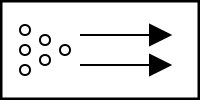
Description
The component generates the diffusional fluxes for Stefan-Maxwell diffusion (Ross Taylor and R. Krishna, 1993) due to partial pressure gradients.

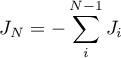
using averaged mole fractions  .
.
Then the molar flow rates become

The energy flow rate is determined as

with
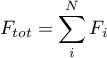
The positive direction for the fluxes is from port A to port B.
Assumptions and Limitations
Actually, the equations presented above are sufficient to determine
the molar flow rates for the case of an equimolar counterdiffusion,
i.e.  . If this condition cannot be
fulfilled, an additional convection component must be added in parallel
to account for the emerging difference in total pressure (Stefan
flux).
. If this condition cannot be
fulfilled, an additional convection component must be added in parallel
to account for the emerging difference in total pressure (Stefan
flux).
Ports
Conserving
Gas conserving port
Port_A = Gas; %
Gas conserving port
Port_B = Gas; %
Input
Physical signal that controls the cross sectional area
Ain = {0,'m^2'};Dependencies: The port is only visible when the option
areaInputis set toOn.
Parameters
Options
Option to select area input
areaInput = OnOff.Off;
Off|On
Geometry
Cross sectional area
A0 = {1,'m^2'};Dependencies: The parameter is only visible when the option
areaInputis set toOff.Transport distance
delta = {1.0e-03,'m'};
Mass Transport
Stefan-Maxwell diffusion coefficients
Dbin = {ones(2,2),'m^2/s'};Note Initially only two species are considered. As the number of species can be changed via the properties dialogue, the size of the array must be adjusted accordingly.
Nomenclature
 |
binary Stefan-Maxwell diffusion coefficient |
 |
molar flow rate of species Ai |
 |
molar enthalpy of species Ai |
 |
departure enthalpy of the mixture |
 |
diffusional flux of species Ai |
 |
total number of species |
 |
pressure |
 |
universal gas constant |
 |
time |
 |
temperature |
 |
mole fraction of species Ai |
 |
energy flow rate |
Bibliography
Ross Taylor and R. Krishna (1993). Multicomponent Mass Transfer, Wiley.